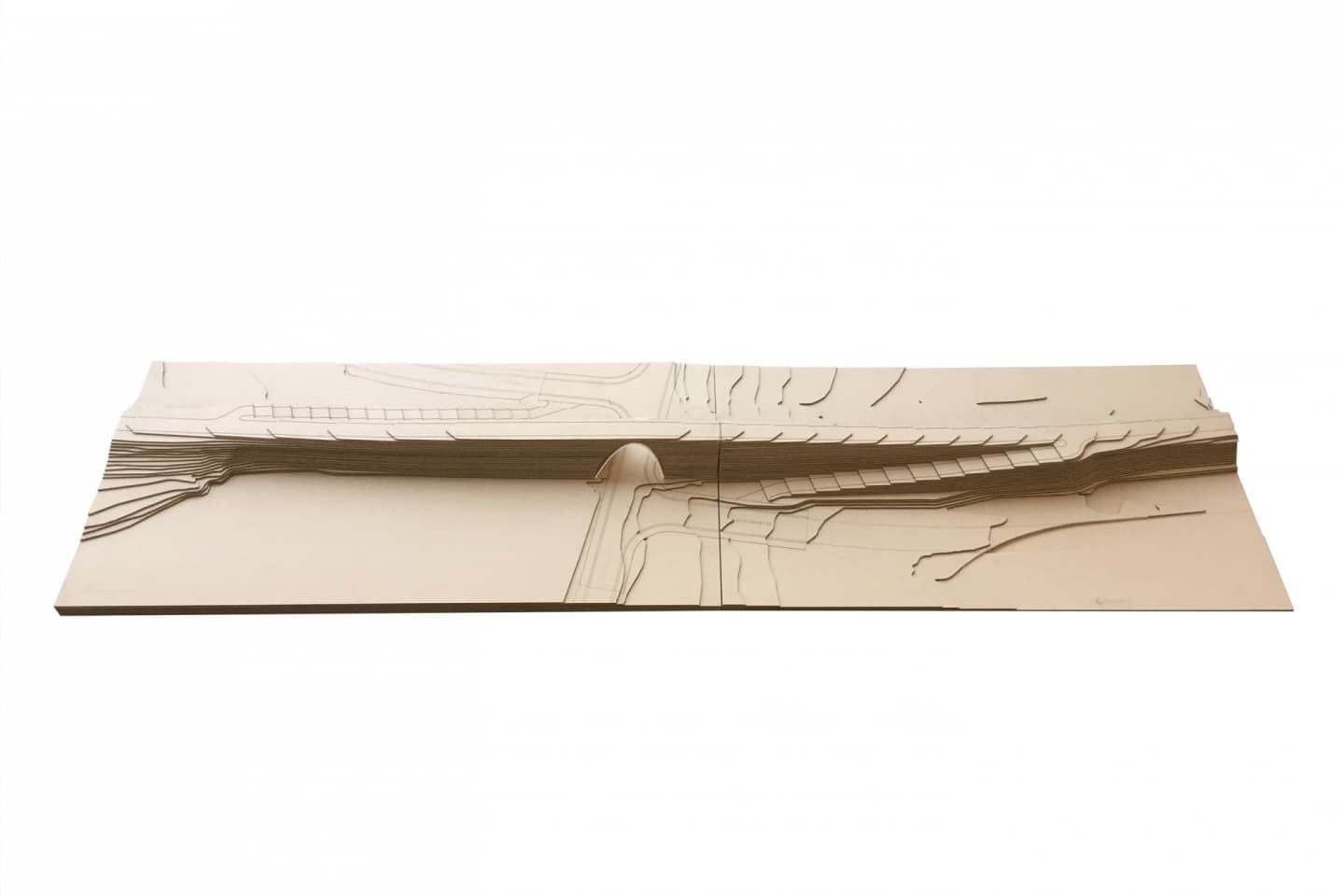
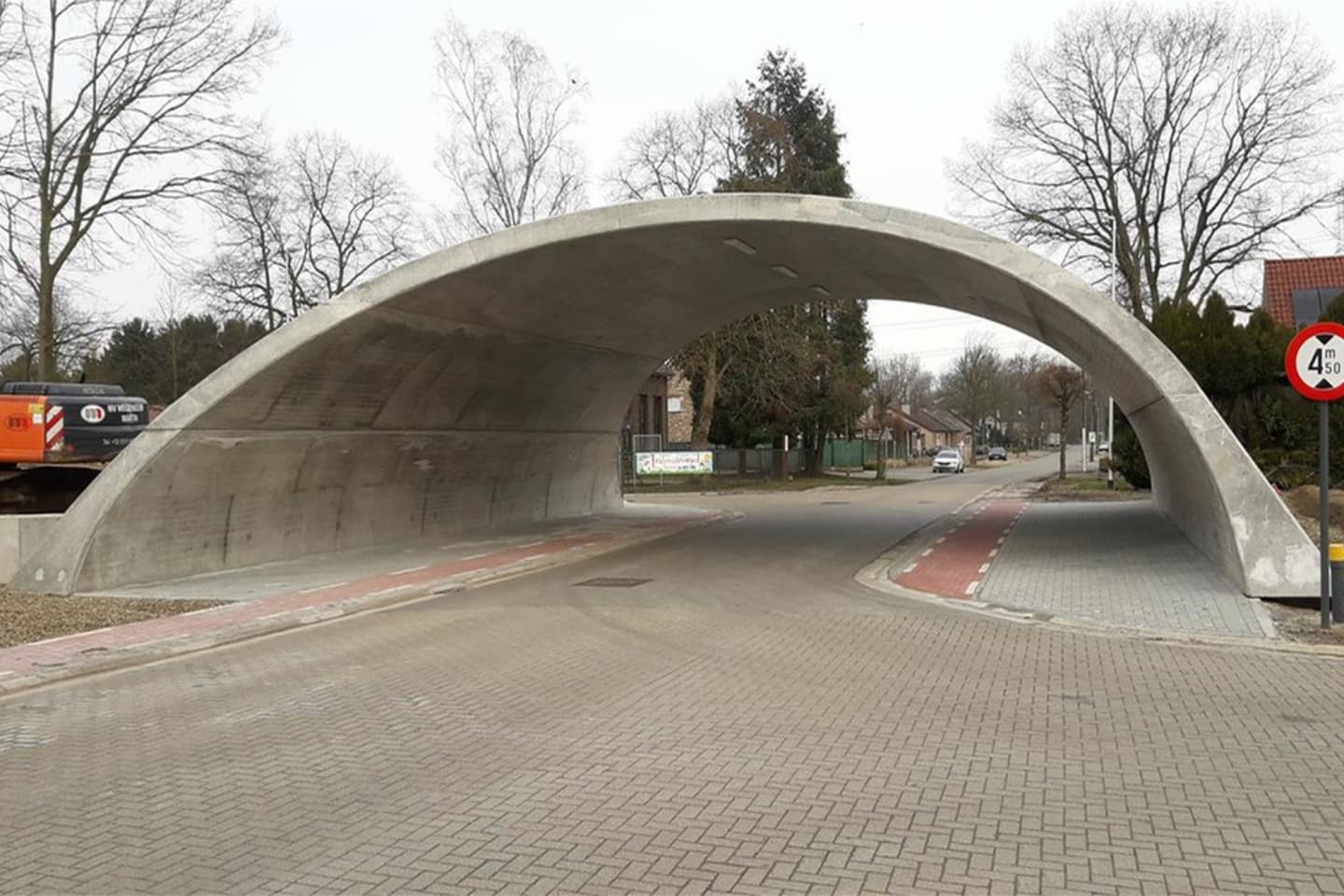
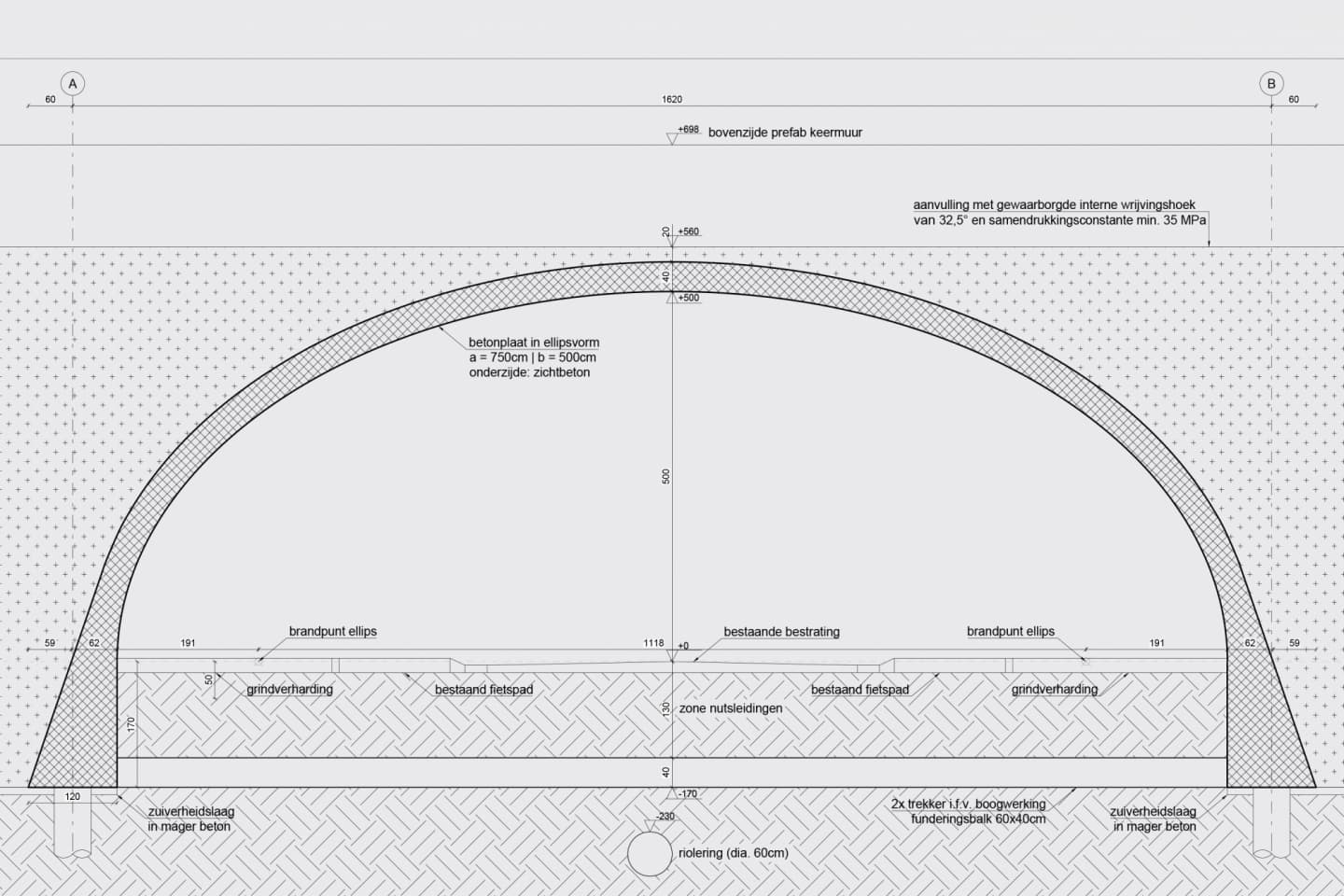
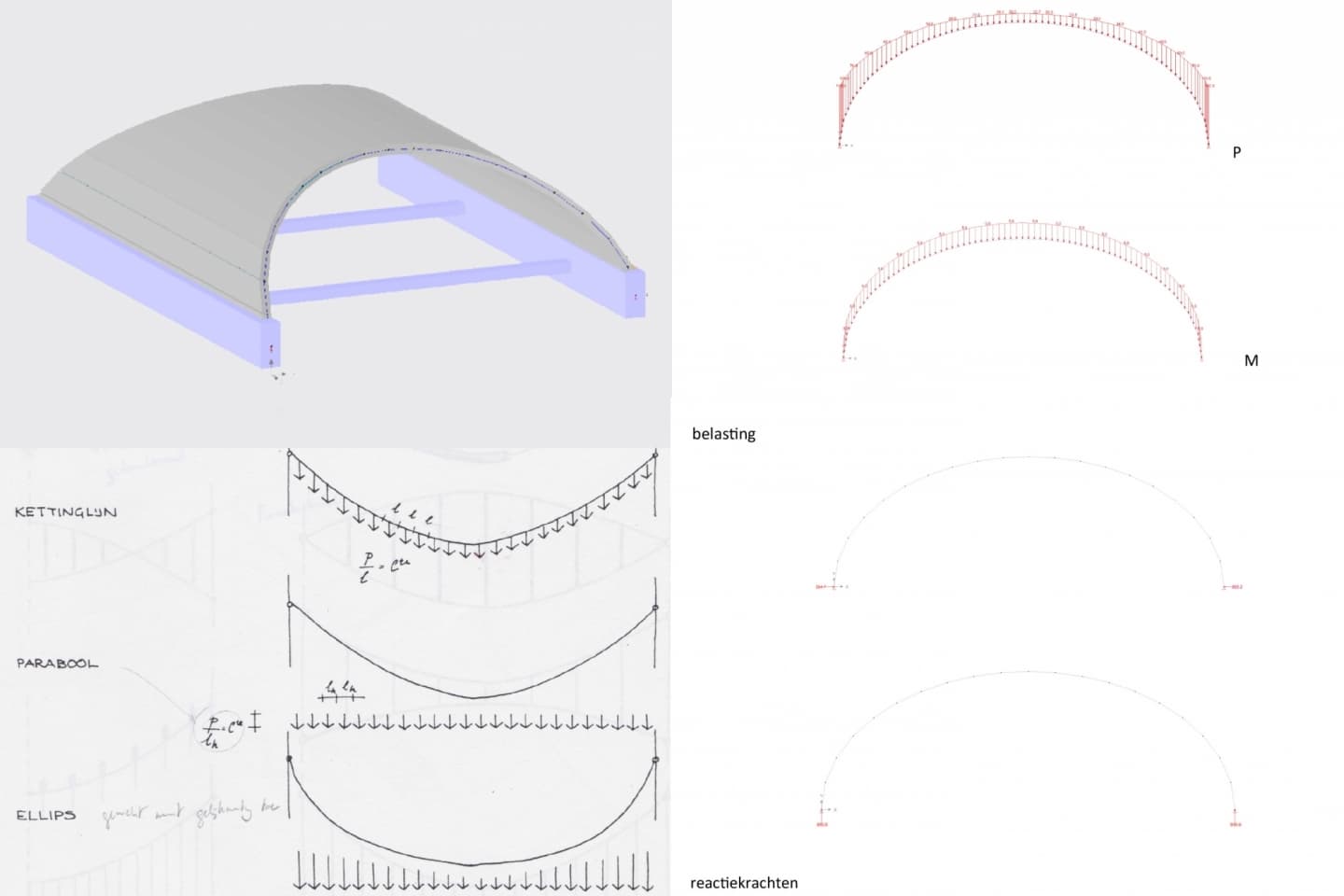
The Genk–As cycle highway, part of the Limburg cycling network, was until recently interrupted at the Kantonweg in Rotem. At this location, cyclists were required to leave the cycle path, which runs along an elevated former tram embankment, in order to cross the municipal road and then rejoin the path via an access ramp. By constructing an arch bridge over the road, it became possible, on the one hand, to extend the embankment of the former coal railway, and thus the cycle highway, and, on the other hand, to organize motorized traffic through the embankment. The principle of a form-active structure makes it possible to minimize bending in the arch, allowing the arch shell of the bridge to be kept as thin as possible. Through form-finding methods, the most optimal shape can be determined according to the nature of the loads. As the soil cover above the bridge increases from the centre towards the ends, the arch is subjected to a non-uniform load. A similarly non-uniformly loaded catenary, suspended between two points at equal height, assumes the shape of an ellipse in which only tensile forces occur. In its inverted form, only compressive forces are present, making concrete an ideal material choice. As a result, only minimal reinforcement is required. The horizontal forces at the foot of the arch are taken up by tie beams beneath the deck, following the bowstring bridge principle.